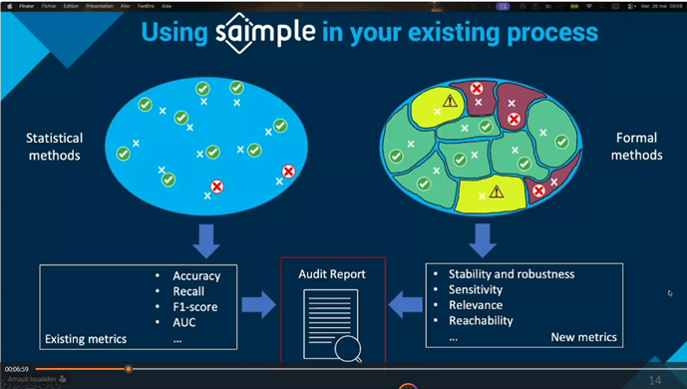
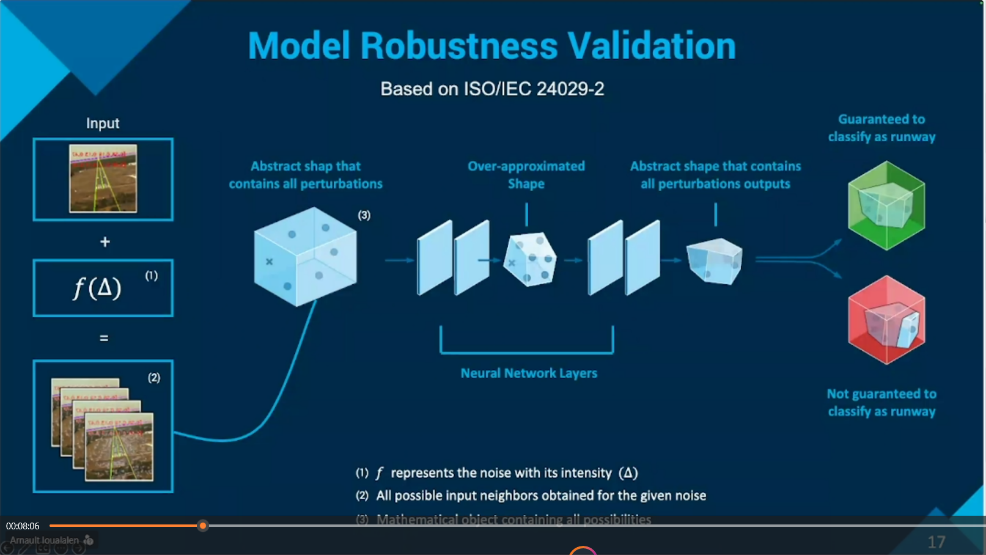
Saimple, developed by France-based Numalis, uses formal methods to support AI model robustness validation and explainability analysis. Unlike conventional statistical metrics such as Accuracy, Recall, F1-Score, or AUC, Saimple analyzes how a model behaves across a defined input subspace. For image classification, users can define a reference image, perturbation functions, and perturbation intensity to evaluate whether the model output remains within an acceptable range under noise, blur, fog, rain, or lighting changes.
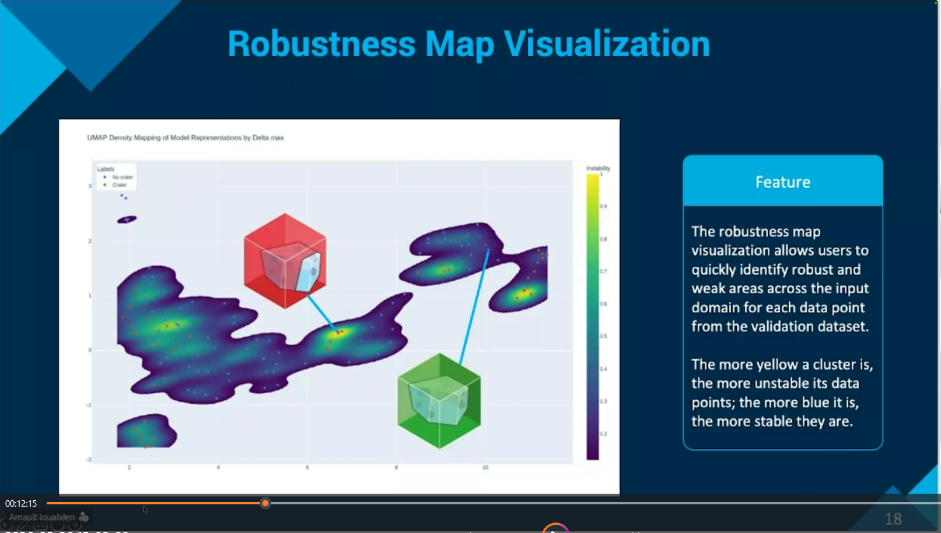
Saimple can generate Robustness Maps to highlight weaker areas in the input domain and provide XAI features to help verify whether a model makes decisions based on relevant features. The tool is currently applicable to Computer Vision, Time Series, and Tabular Data tasks, and supports models such as Neural Networks, CNNs, RNNs, SVMs, Random Forests, and gradient boosting. It may complement existing statistical testing and serve as supporting evidence for standardized AI Robustness Testing Procedures and high-risk AI system evaluation.